

Current events
Next talk on Friday in 3 days by Bernd Beschoten.
News 11.09.2026
Ananya Singh wins 3rd Poster Prize at the ML4Q Annual Conference
Site Content:
11.09.2026
Ananya Singh wins 3rd Poster Prize at the ML4Q Annual Conference
Congratulations to Ananya Singh for winning the 3rd Poster Prize at the annual ML4Q conference at "Westerwald Treff". The awarded poster was titled “Ferroelectric Control of Topological Quantum Hall Edge States in Graphene on SrTiO₃.” Well deserved, and congratulations!

14.08.2026
Research stay of Elise Barron from Georgia Tech
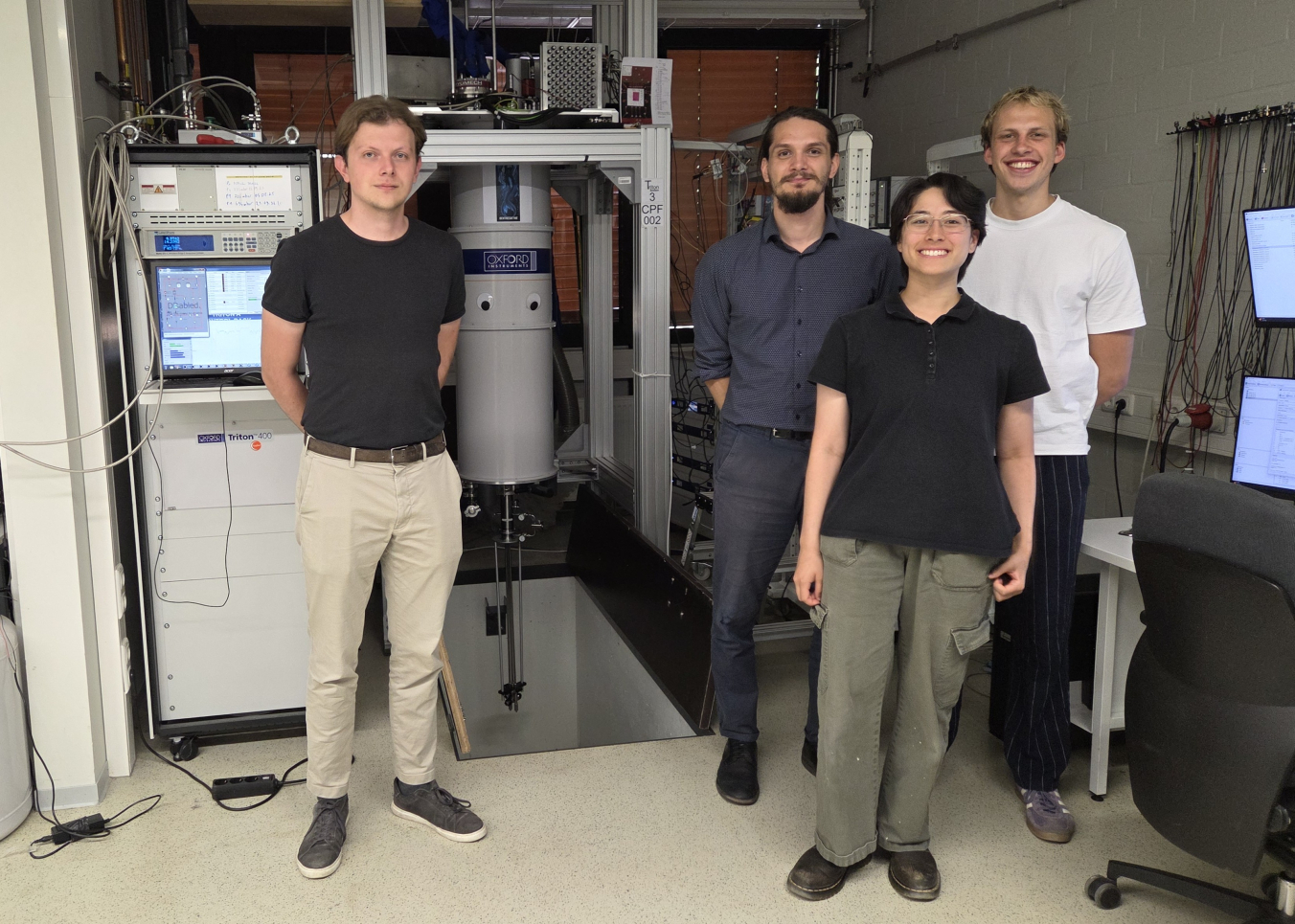
Elise Barron from Georgia Tech completed a 2.5-month research stay in our group from 1 June to 14 August 2026 as part of the Global Quantum Leap IRTE program. During her stay, she joined our bilayer graphene quantum dot team and contributed to one of the 2026 summer GQL IRTE research projects. It was a pleasure to host her in Aachen and to have her as part of the team.
10.07.2026
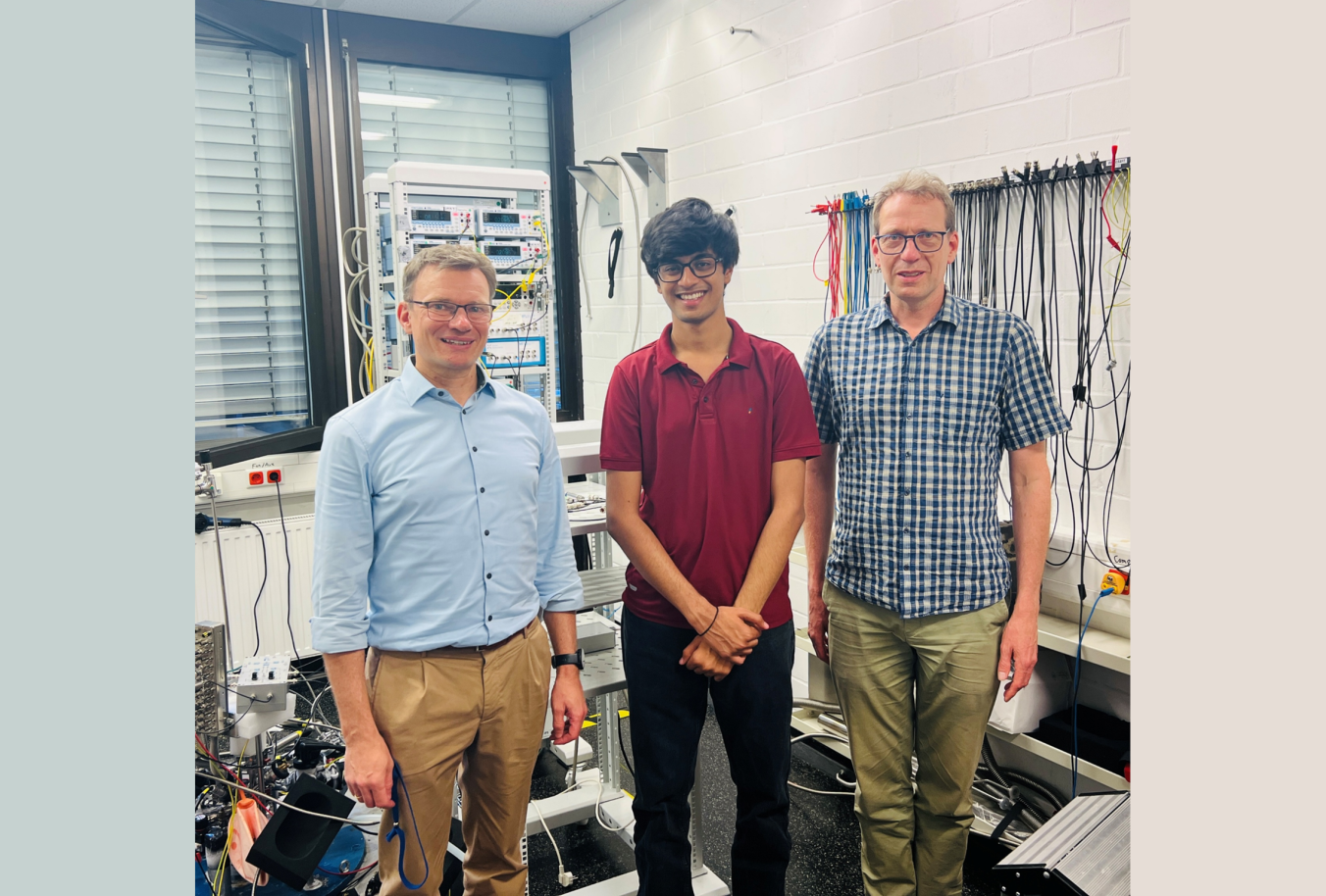
Visit by Ludger Wirtz and Atharv Maheshwari
On Friday 10 July, we were happy to welcome Ludger Wirtz and Atharv Maheshwari to our institute. Ludger, who was the supervisor of Christoph Stampfer’s diploma thesis, gave an excellent seminar on the 'Symmetry of Excitons'. The visit also gave us the opportunity to have a number of interesting scientific discussions throughout the day.
Many thanks to Ludger and Atharv for visiting us and for the stimulating exchange.
30.06.2026
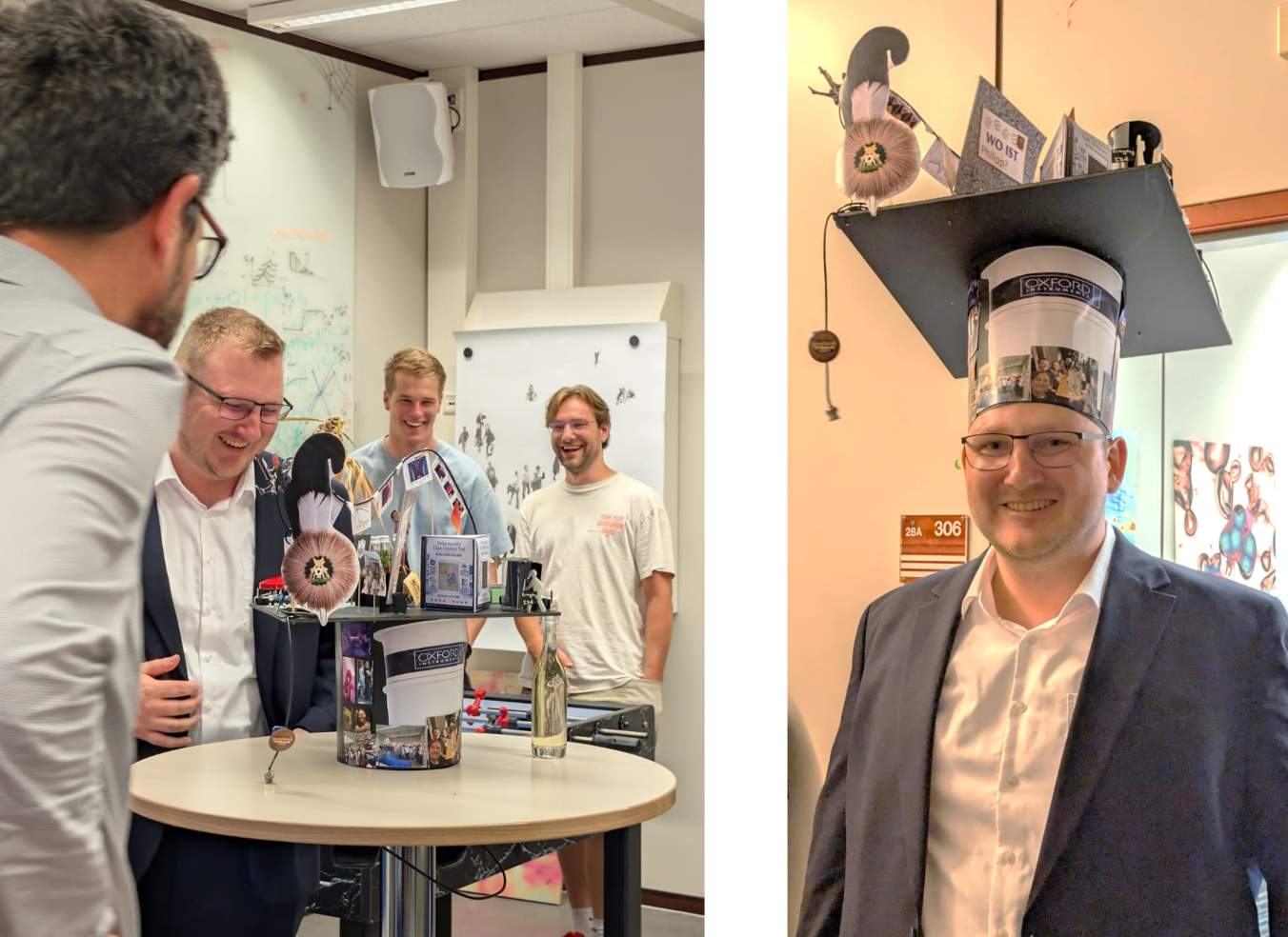
Philipp Schmidt successfully defended his PhD thesis
On Tuesday,30 June 2026, Philipp Schmidt successfully defended his PhD thesis. We warmly congratulate Dr. Philipp Schmidt on this great achievement! A big thank-you and congratulations also go to the entire team for the great "Doktorhut"!
29.06.2026
SPP exchange visit between Regensburg and Aachen
From 22 to 26 June 2026, Ching-Hung Chiu und Dennis Mayer from the group of Angelika Knothe at the University of Regensburg visited our group at RWTH Aachen as part of an exchange between two closely connected SPP 2244 projects. The visit links the experimental project “Confining electrons in twisted and proximity-coupled bilayer graphene” in Aachen with the theoretical project “Electronic, Optical, and Transport Properties of Quantum Dots in Proximitised Bilayer Graphene” in Regensburg. The exchange will focus on quantum dots in proximitised bilayer graphene and on optimal control schemes for qubit operations in quantum-dot devices. The direct interaction between theory and experiment will help to gain a deeper understanding of the quantum devices fabricated in Aachen and to develop more realistic models tailored to the experimental devices. At the same time, the Aachen group will benefit from close theoretical input on confined states and transport in proximitised bilayer graphene.
19.06.2026
Research stay of Erica Fragomeni completed
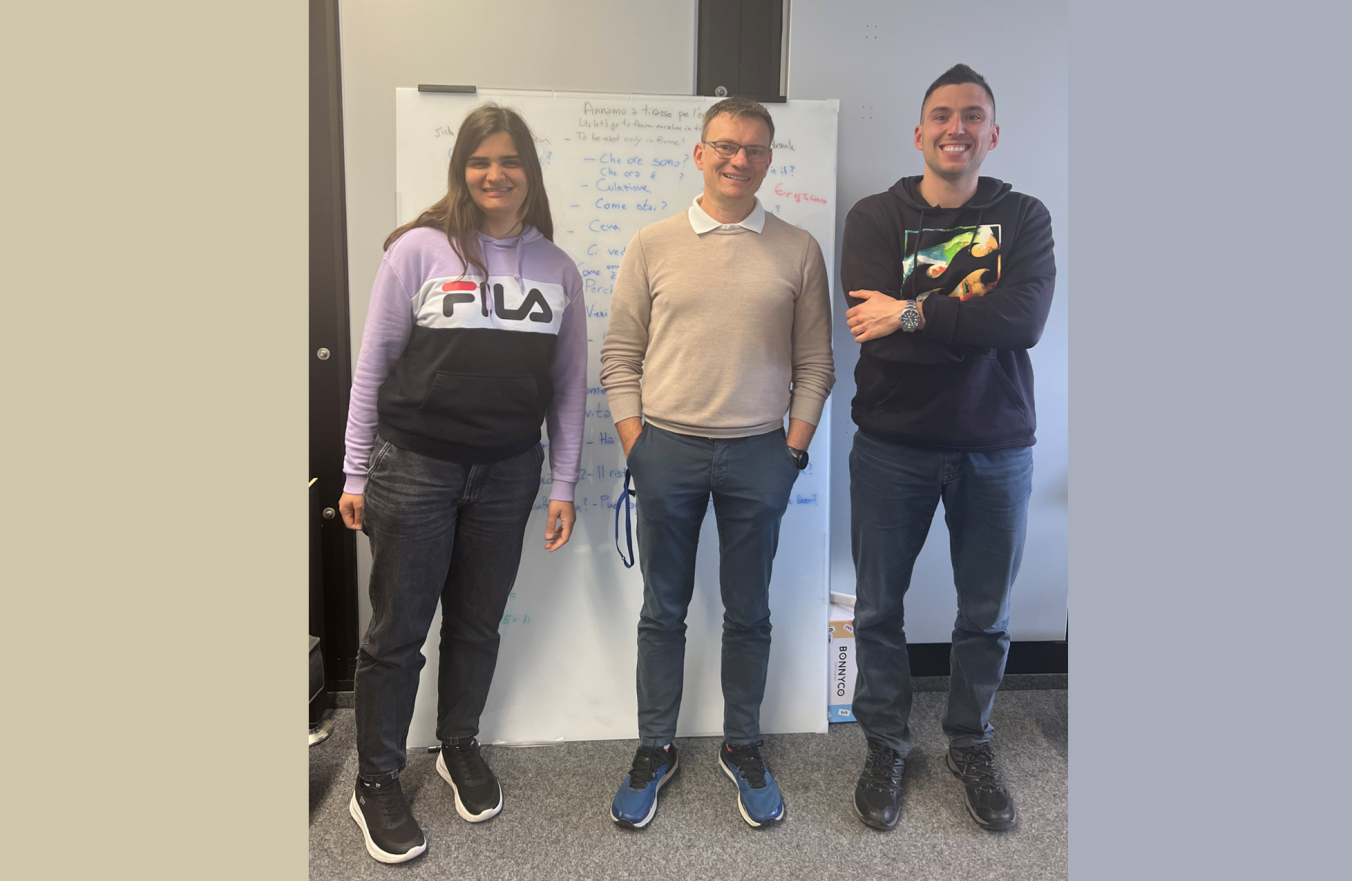
Erica Fragomeni from Sapienza University in Rome has successfully completed her three-month research stay in our group at RWTH Aachen University.
Erica joined us from 21 March to 19 June 2026 through the Sapienza University Mobility Programme, supported by a mobility grant she had been awarded. During her stay, she worked on the project Probing Electron-Phonon Coupling in Graphene: From Sample Fabrication to Infrared Resonance Raman Investigation.
It was a pleasure to have Erica in Aachen, and we wish her all the best for the next steps of her research.
08.06.2026
Corinne Steiner successfully defended her PhD thesis
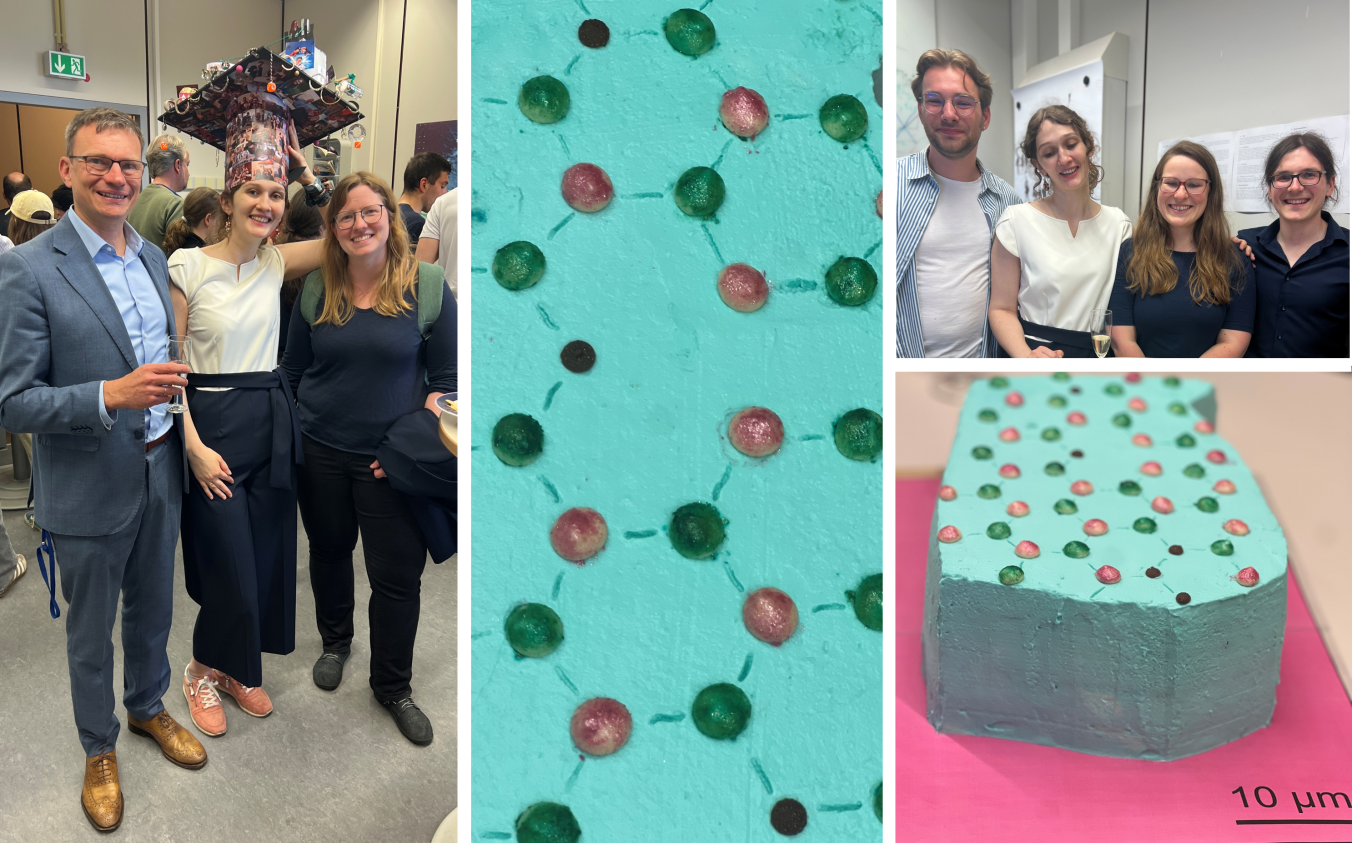
On Tuesday, 02 June 2026, Corinne Steiner successfully defended her PhD thesis. We warmly congratulate Dr. Corinne Steiner on this great achievement! A big thank-you and congratulations also go to the entire team for the great "Doktorhut" and Lars, Katrin and Nils for unique hBN cake (even including a defect and a scale bar)!
05.06.2026
New publication: Real-time camera experiments with phyphox
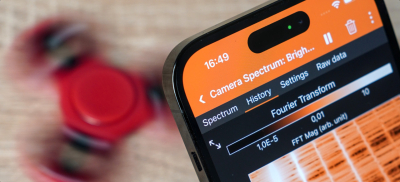
In this paper we present our new video features. Most smartphone experiments come in one of two ways: either by collecting live sensor data or by analyzing video recordings afterward. Our new feature now brings these two approaches together by enabling real-time experiments directly through the phone’s camera. Users can simply point their camera at an experiment, select a region of the image, and instantly track properties such as brightness, relative luminance, or color values based on the HSV color model (hue, saturation, and value). With frame rates reaching up to 240 frames per second, you can capture fast processes with impressive temporal precision. Because the camera data feeds directly into phyphox’s flexible analysis tools, users can create and customize a wide range of experiment configurations. This opens up new possibilities for measurements over large distances, improved data analysis in existing classic experiments, and highly accurate timing applications — all using nothing more than a smartphone camera.
Showing 1 - 8 (302 total) - Next