

Current events
Next talk tomorrow at 11:00 by Lars Mester!
News 11.09.2026
Ananya Singh wins 3rd Poster Prize at the ML4Q Annual Conference
Site Content:
30.06.2022
New publication: Collaborative smartphone experiments for large audiences with phyphox
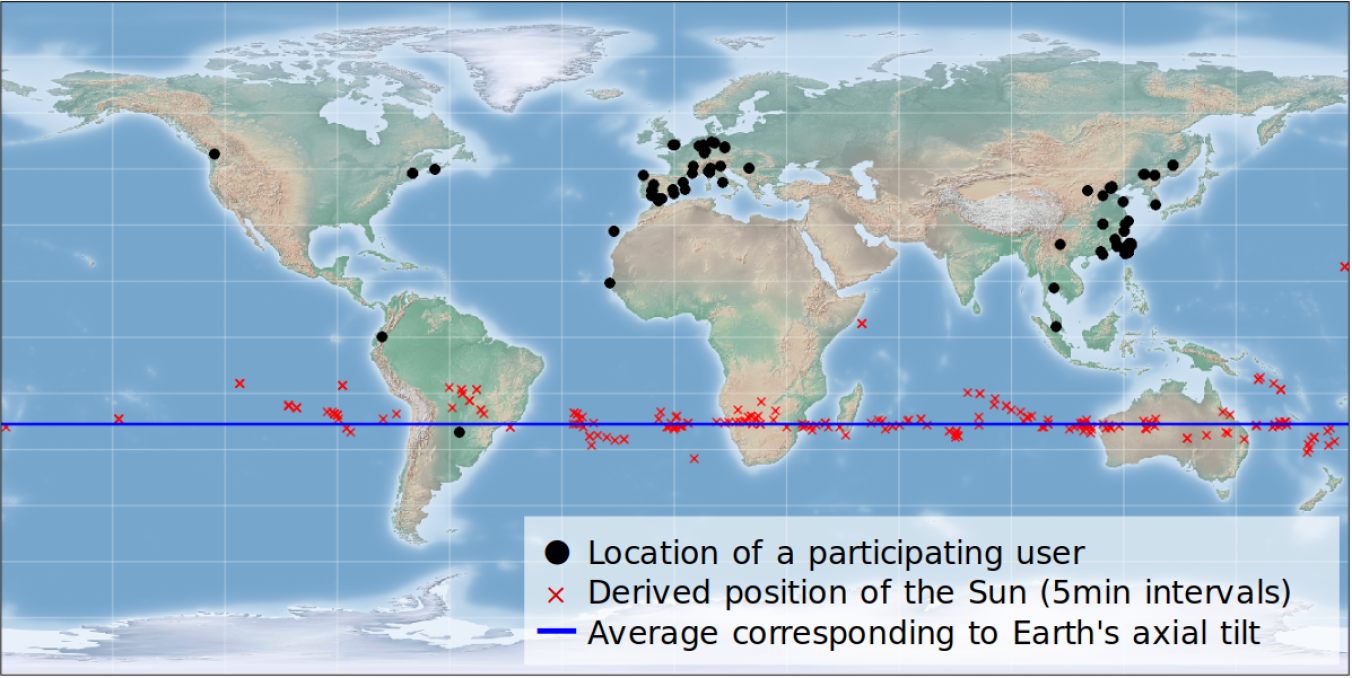
We present methods to implement collaborative experimentation with smartphone sensors for larger audiences ranging from typical university undergraduate courses of hundreds of students in a lecture hall to world-wide outreaches on the Internet. These methods are based on the app 'phyphox', which is being developed by the authors, and encompass simple data collection via web forms as well as a new network interface for 'phyphox', allowing to collect real-time experiment data from an audience on-site or easy data submission for remote participants. Examples are given with practical considerations derived from first implementations of this method in a lecture hall with 350 undergraduate students as well as a global experiment to determine the Earth's axial tilt with smartphones.

23.06.2022
New publication: CVD Bilayer Graphene Spin Valves with 26 μm Spin Diffusion Length at Room Temperature
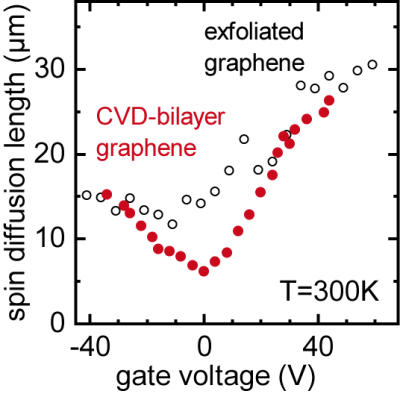
Nano Lett. 22, 4949 (2022) We present inverted spin-valve devices fabricated from CVD-grown bilayer graphene (BLG) that show more than a doubling in device performance at room temperature compared to state-of-the-art bilayer graphene spin valves. This is made possible by a polydimethylsiloxane droplet-assisted full-dry transfer technique that compensates for previous process drawbacks in device fabrication. Gate dependent Hanle measurements reveal spin lifetimes of up to 5.8 ns and a spin diffusion length of up to 26 μm at room temperature combined with a charge carrier mobility of about 24 000 cm2(Vs)−1 for the best device. Our results demonstrate that CVD-grown BLG shows equally good room temperature spin transport properties as both CVD-grown single-layer graphene and even exfoliated single-layer graphene.
03.05.2022
New publication: Visualisierung von Messdaten eigener Sensormodule mit phyphox (in German)
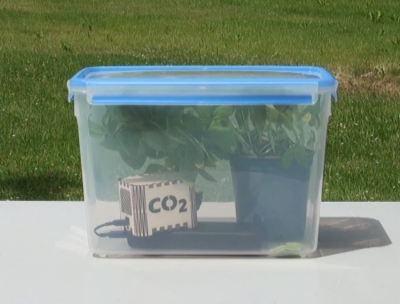
In this German publication we demonstrate how the phyphox BLE library for Arduino can be used to easily visualize data from a custom build sensor on your smartphone. We use CO2 sensor kits as an example, which have been designed as an assembly kit for schools during the pandemic. But besides being a tool to monitor air quality, the easy visualization with phyphox allows for more advanced uses in STEM classes, with experiments in Biology, Chemistry and of course Physics.
31.03.2022
New publication: Using a Smartphone pressure sensor as Pitot tube speedometer
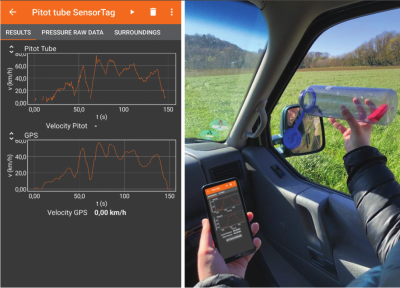
As smartphones have become a part of our everyday life, their sensors have successfully been used to allow data acquisition with these readily available devices in a variety of different smartphone-based school experiments. Such experiments most commonly take advantage of the accelerometer and gyroscope. A less frequently used sensor in smartphone-based experiments is the pressure sensor or barometer. Pressure sensors in smartphones can improve indoor navigation, for example in multi-story shopping malls. In a popular smartphone experiment, the barometer is used to determine the current altitude in an elevator with the barometric height formula. Along with accelerometer data and by deriving the height data to calculate the velocity, z(t), v(t), and a(t) plots can be generated and shown to students in real time.
18.03.2022
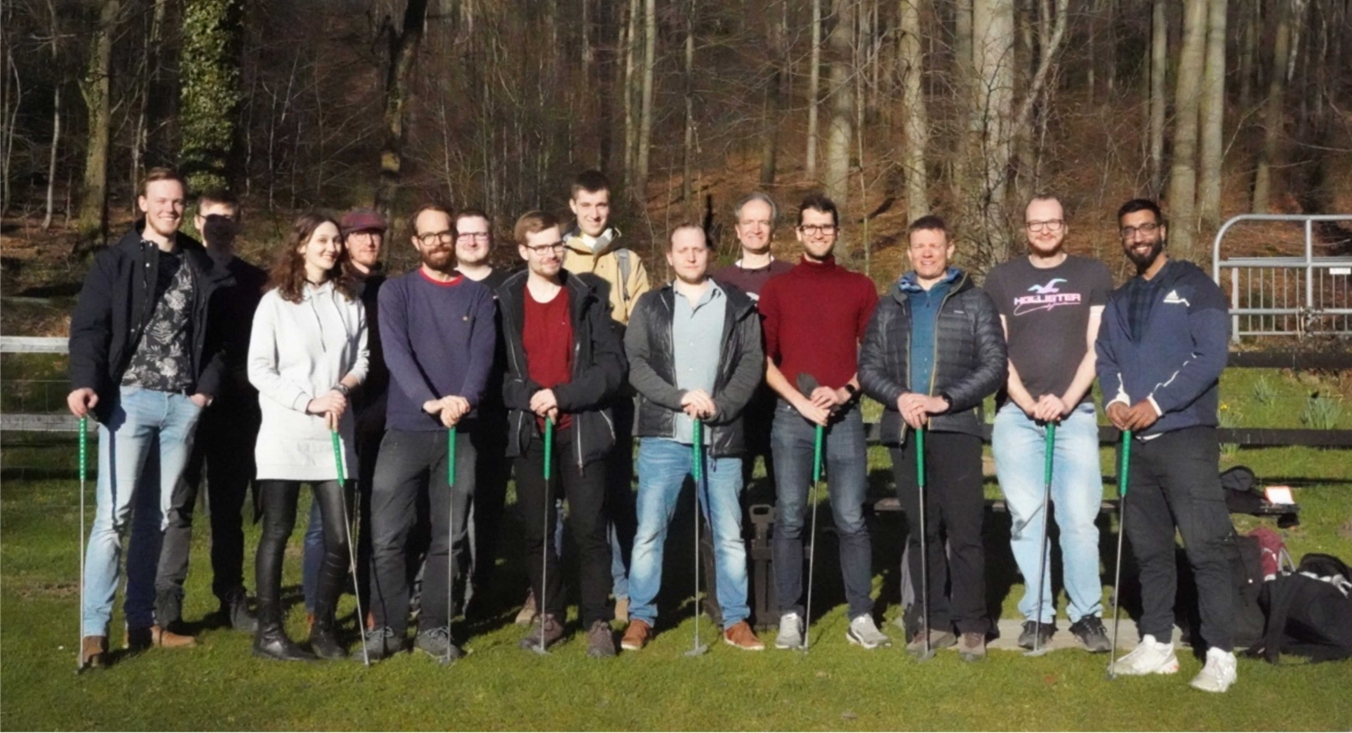
Short group excursion
Walked from the Kronenberg through the Aachenerwald to the Gut Entenpfuhl and played a round of mini-golf there. The weather was more than fine and being outside is always great.
21.02.2022
Quanteen Day 2022
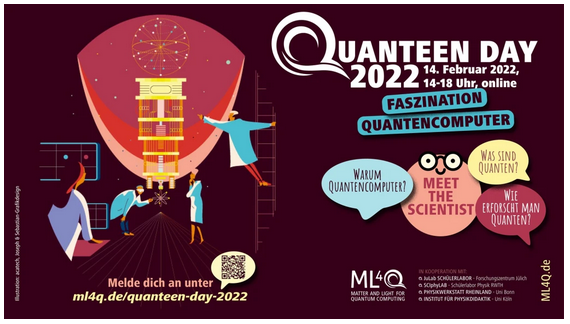
Unter dem Motto 'Faszination Quantencomputer' fand am 14.02.22 der von ML4Q organisierte Quanteen day statt. Hierbei konnten interessierte Schüler:innen in Impulsvorträgen mehr über die Physik hinter Quantencomputern erfahren und anschließend Einblicke in den Alltag von Doktorand:innen bekommen, die in diesem Feld forschen. Von unserem Institut mit dabei waren auch Annika Kurzmann und Corinne Steiner, die bei einer virtuellen Labortour Einblicke in ihre Forschung gegeben haben.
12.02.2022
New book chapter: "Überwachte Rollbewegung mit phyphox"
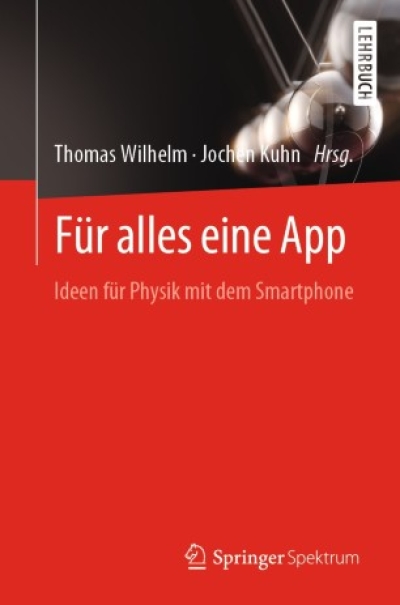
German only – Sebastian Staacks und Christoph Stampfer tragen mit einem Kapitel „Überwachte Rollbewegung mit phyphox“ zu dem neuen Buch „Für alles eine App - Ideen für Physik mit dem Smartphone“ von Thomas Wilhelm und Jochen Kuhn (Springer 2022) bei.
12.02.2022
Phyphox in the RWTH alumni magazine
We have contributed an article with a bit of project history to this term's RWTH alumni magazine.